If your child needs orthodontic treatment, one of the first questions parents ask is: braces or Invisalign? Both options are effective, but they work in different ways and come with their own pros and cons. Understanding how each treatment works, along with the lifestyle changes involved, can help you choose the option that best fits your kiddo’s needs and daily routine.
How do braces and Invisalign work?
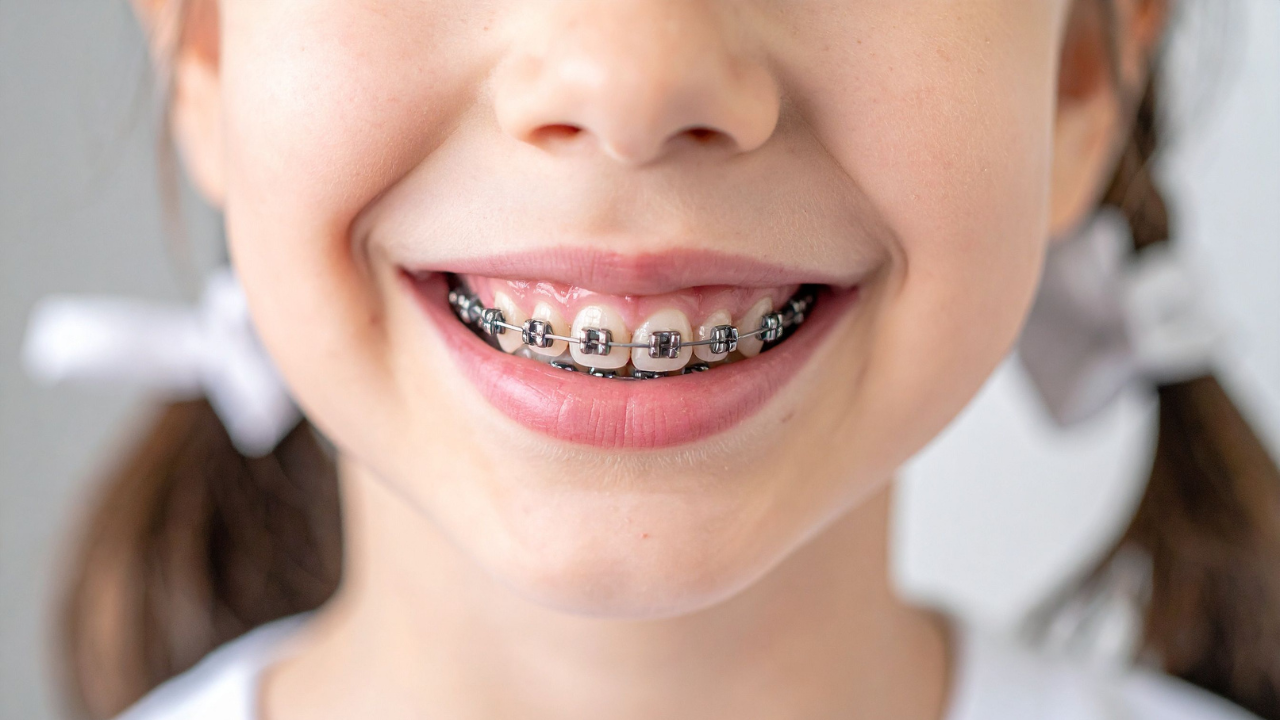
Braces: Traditional braces use metal brackets that are bonded to the enamel of each tooth. An orthodontist places a metal archwire through the bracket and secures it with elastic O-rings (this is where you get the fun, customizable colors at each visit). Over time, the orthodontist adjusts the archwire to move the teeth into better alignment.
Because braces are bonded to the teeth, they cannot be removed and are worn 24 hours a day until treatment is complete. While metal braces are the most common choice, clear braces are also available for a less noticeable look.
Invisalign: Invisalign uses a series of clear, removable aligners that are custom-made using a 3D digital scan of your teeth. Each aligner tray is designed to move teeth slightly, usually less than a millimeter at a time. Each tray is worn for about 7-10 days before switching to the next tray in the series. Aligners must be worn 22 hours a day, but they can be removed for eating, drinking, brushing, and flossing.
Some Invisalign treatment requires small, clear attachments to be placed on certain teeth. These attachments are made of a dental composite and help the aligners grip the teeth more effectively. Attachments are typically subtle and blend in with the natural tooth color, though they may be noticeable up close. They are temporary and removed at the end of treatment without damaging the teeth.
Braces
Pros:
- Fixed to the teeth: Since braces are bonded to the teeth, treatment is less dependent on compliance
- Suitable for growing smiles: Can accommodate ongoing tooth eruption
Cons:
- Oral hygiene can be more challenging: Brackets and wires can make brushing and flossing harder, but most patients adjust with practice and guidance
- Food restrictions: Sticky, chewy, or hard food can damage brackets or wires, so it’s recommended to avoid these
- Potential discomfort: Brackets and wire may cause irritation to the lips or cheeks
- More frequent adjustment appointments: Braces require regular in-office visits for wire adjustments, which may mean more frequent or longer appointments compared to Invisalign
Invisalign
Pros:
- Removable for eating and cleaning: Because aligners are removable, kids can keep their normal brushing and flossing routines without brackets or wires in the way.
- No wires or brackets: Often more comfortable with less irritation to the cheeks and lips
- Fewer and shorter office visits: Patients typically experience fewer emergency visits and quicker check-ins
- No food restrictions: Sticky, chewy, or hard foods can still be enjoyed if aligners are removed and teeth cleaned before putting them back in.
- Digital treatment plan: Invisalign uses 3D digital scans to map tooth movement, allowing families to preview the expected results before treatment begins.
Cons:
- Must be worn at least 22 hours per day: Consistent wear is critical for effective treatment
- Requires responsibility: Aligners must be worn, removed, and cleaned properly
- Cost may be higher: Invisalign can be more expensive depending on the treatment plan
Next Steps
Choosing between braces and Invisalign ultimately comes down to your kiddo’s unique needs, lifestyle, and orthodontic goals. Both options are effective when used correctly, and the right choice is best determined with the guidance of an orthodontist. If you’re unsure which treatment is the best fit, we’re here to help. We offer free orthodontic consultations, where our team can evaluate your kiddo’s smile, answer your questions, and create a personalized treatment plan. You can book instantly online using the link below.

This article has been reviewed for medical accuracy by Dr. Reginald Fulford, Clinical Director of Orthodontics at Kids Care Dental & Orthodontics.